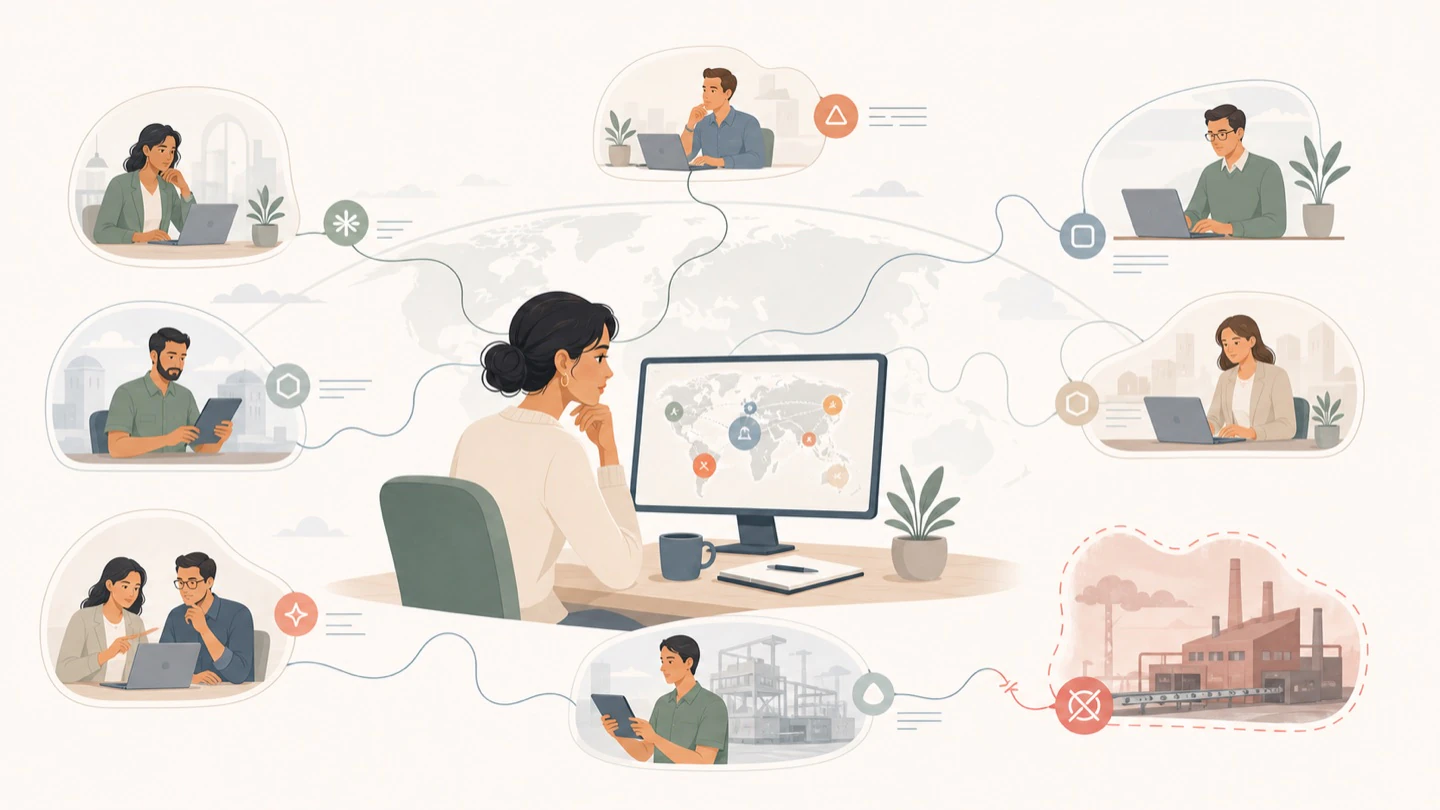
Orion Industrial's supplier-security standard existed in eleven languages, seven document systems, and more local variations than anyone could count. The 4,000-person group operated factories, product teams, and service organizations in twelve countries. Some sites were continuously connected to corporate systems. Others synchronized through regional servers after production shifts. Acquired businesses often kept their own AI vendors and document platforms.
When the global security team changed the standard for software suppliers, publishing a new PDF was the easy part. The difficult questions came afterward. Which procurement agents needed a new questionnaire? Which coding assistants needed a software-supply-chain rule? Which regional clause conflicted with the global wording? Which offline factory would still use the old version next week?
In onemind, the global owner updated one semantic control with a proposed effective date. The impact preview crossed the Project tree: Group, Region, Business Unit, Site, Product Line, and active procurement programs. It found 186 affected tool packages, 34 questionnaires, 12 training packages, and 9 approved local extensions.
Regional owners did not receive an instruction to “accept global.” They received a localized diff, the reason for change, linked legal sources, translation status, affected workflows, and four response paths. They could accept, add a stricter local extension, request a governed exception with compensating control, or mark the rule not applicable with evidence.
In Germany, the local owner accepted the control but corrected a translated term that implied a different legal role. The correction remained linked to the same semantic rule rather than creating a hidden policy fork. In Japan, the procurement team added a stricter evidence requirement. In one acquired business unit, the owner requested a ninety-day exception because its supplier portal could not capture the new document. The exception named a compensating manual review, risk owner, evidence, and expiry.
onemind built different packages from the same decision. Procurement agents received the questionnaire, scoring rule, and regional clauses. Coding tools received only the software dependency and provenance requirements. Factory maintenance assistants received nothing because the rule did not affect their work. Training systems received role-appropriate training in the approved language.
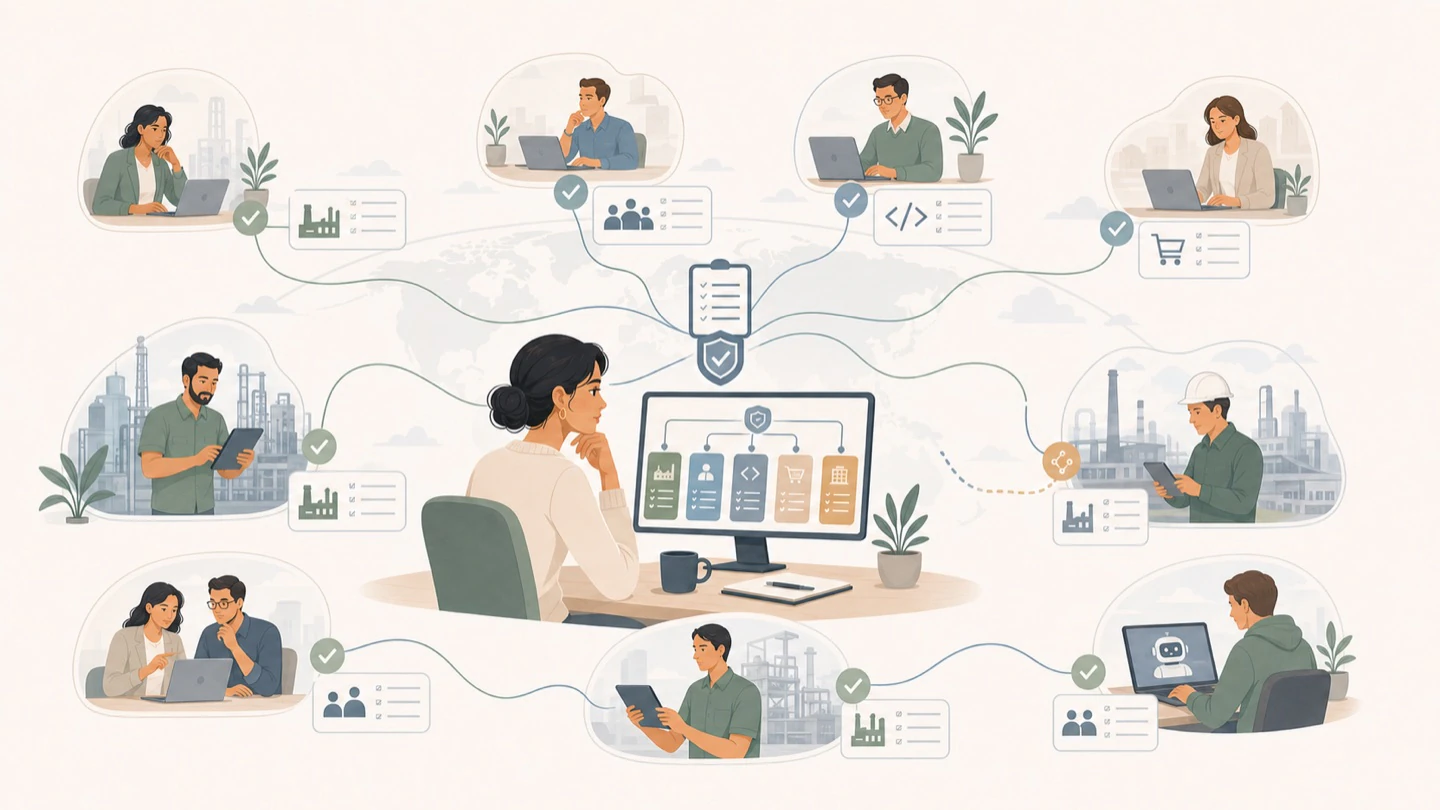
Two factories operated through regional onemind nodes. They received signed packages with an expiry and minimum supported version. One site stayed offline beyond the expected window after a network failure. Its procurement workflow degraded to the approved continuity process and could not approve a new high-risk supplier until synchronization returned. Maintenance guidance remained available read-only.
At the same time, Orion was integrating a newly acquired company called Vela Controls. Vela's engineers used an AI coding tool Orion had never deployed. Instead of forcing a tool migration, the integration team built an adapter and ran onemind's conformance suite against representative Projects. The tool could express mandatory coding rules and retrieve standards, but it could not run Orion's policy hooks. Orion kept Vela's tool for development while requiring the central CI hook for supplier checks. The limitation stayed visible in reports.
Six months later, Orion replaced a different AI vendor used by three software groups. The durable Mind did not move; only the adapter, local packages, and validation suite changed. Mandatory-rule coverage was compared before rollout. One unsupported semantic delayed one team until a replacement hook was ready.
The transformation was not quick. Orion spent months identifying owners, resolving duplicate standards, approving translations, and onboarding representative sites. onemind did not flatten that complexity. It made it explicit and governable. Leaders could see which Projects had accepted, extended, excepted, or not received the rule. Local experts kept their justified differences, while “we published the PDF” stopped being mistaken for proof that the organization's AI-assisted work had changed.