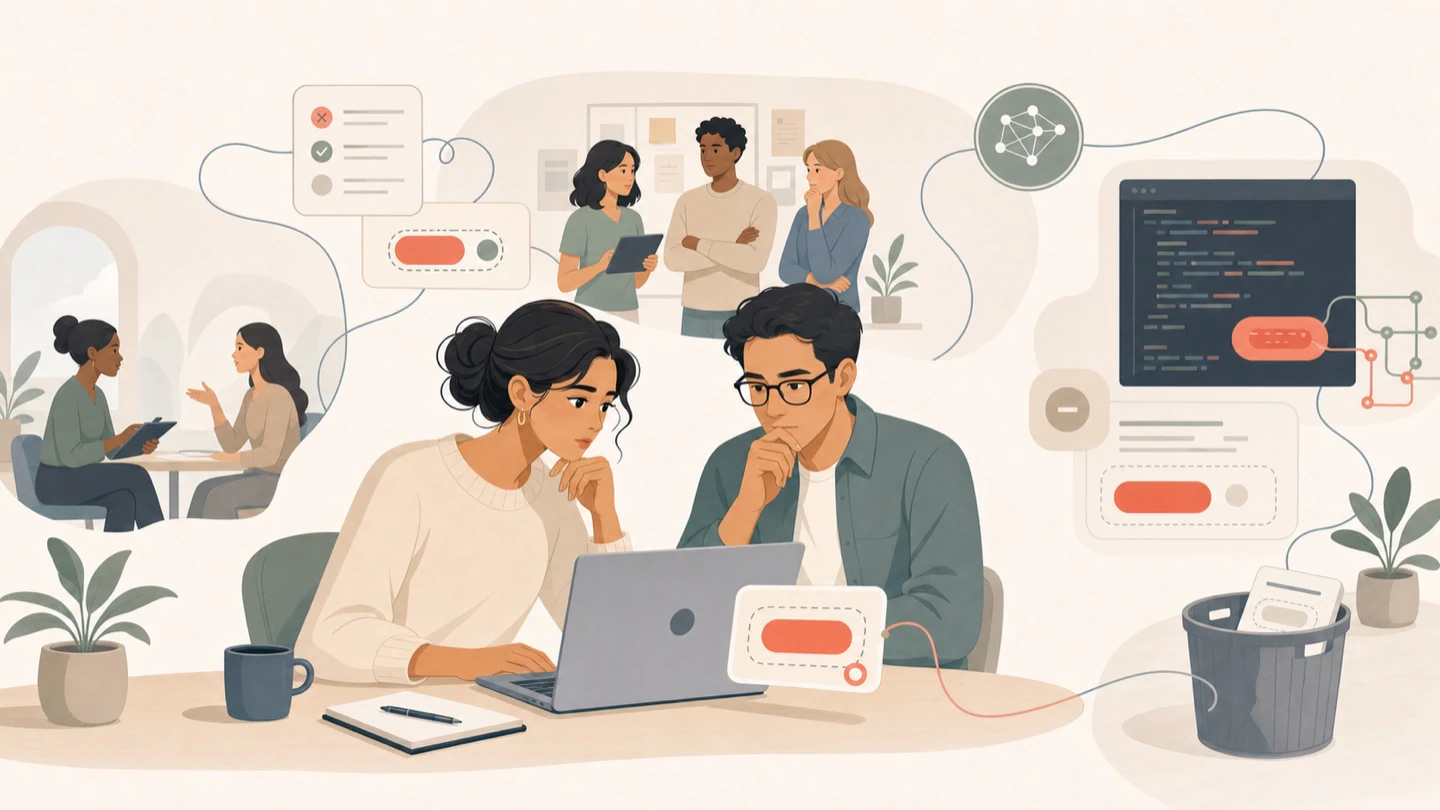
The button appeared in a pull request on Thursday afternoon: Run autonomously.
Lena, Northstar's designer, stared at it for several seconds. The six-person AI product studio had removed almost the same button eight weeks earlier after user interviews showed that people did not trust an undefined autonomous process. The team had renamed the experience “guided investigation,” redesigned the progress view, and changed the homepage. Yet Daniel, a new engineer, had asked Cursor to add a shortcut for power users, and the old idea had returned with clean code and good tests.
Nothing in Daniel's task was obviously wrong. The issue was history. The rejected design lived in an old Figma page, the research synthesis lived in ChatGPT, the positioning decision lived in a founder's document, and the removal discussion lived in Slack. Cursor saw the repository and the ticket. It did not see why the team no longer wanted the feature.
Northstar's onemind was built to make that kind of product judgment durable without turning every opinion into a rule. The company Mind contained its mission, target customer, vocabulary, and quality principles. Product, Experience, Platform, and Growth Projects owned different decisions. User-interview recordings were connected sources, but findings became active only when an owner accepted them with evidence, confidence, and a review date.
The autonomous-button decision had started with five interviews. The research agent had coded the transcripts and proposed a lesson: participants understood “guided investigation” and could explain where they remained in control; “autonomous research” made three participants worry that the product would act without permission. The agent included counter-evidence from one experienced user who preferred autonomy. Priya, the product lead, edited the conclusion, marked it medium confidence, and accepted it for Product and Growth. Lena separately approved an Experience rule: controls must show the next action and a human stop point. Platform received the research reference but no instruction to remove autonomous infrastructure.
When Daniel opened the pull request, a onemind review hook recognized that the new button bypassed an accepted Experience rule. It did not reject the code automatically. It posted a warning with the current rule, the research evidence, the deleted Figma component, and the review date. It also showed that Daniel's Cursor session had started with a package generated before he joined the Experience Project. The repository package was current for Platform, but incomplete for the interaction he was changing.
Daniel called Lena instead of defending the implementation. Together they opened the active product-truth view. Lena explained that the problem was not automation itself; it was asking users to surrender control without seeing the plan. Daniel changed the proposal into a “Continue all approved steps” control that displayed the queued actions and kept a stop button visible. onemind linked the new Figma component, the implementation, and an interaction test that verified the stop point.
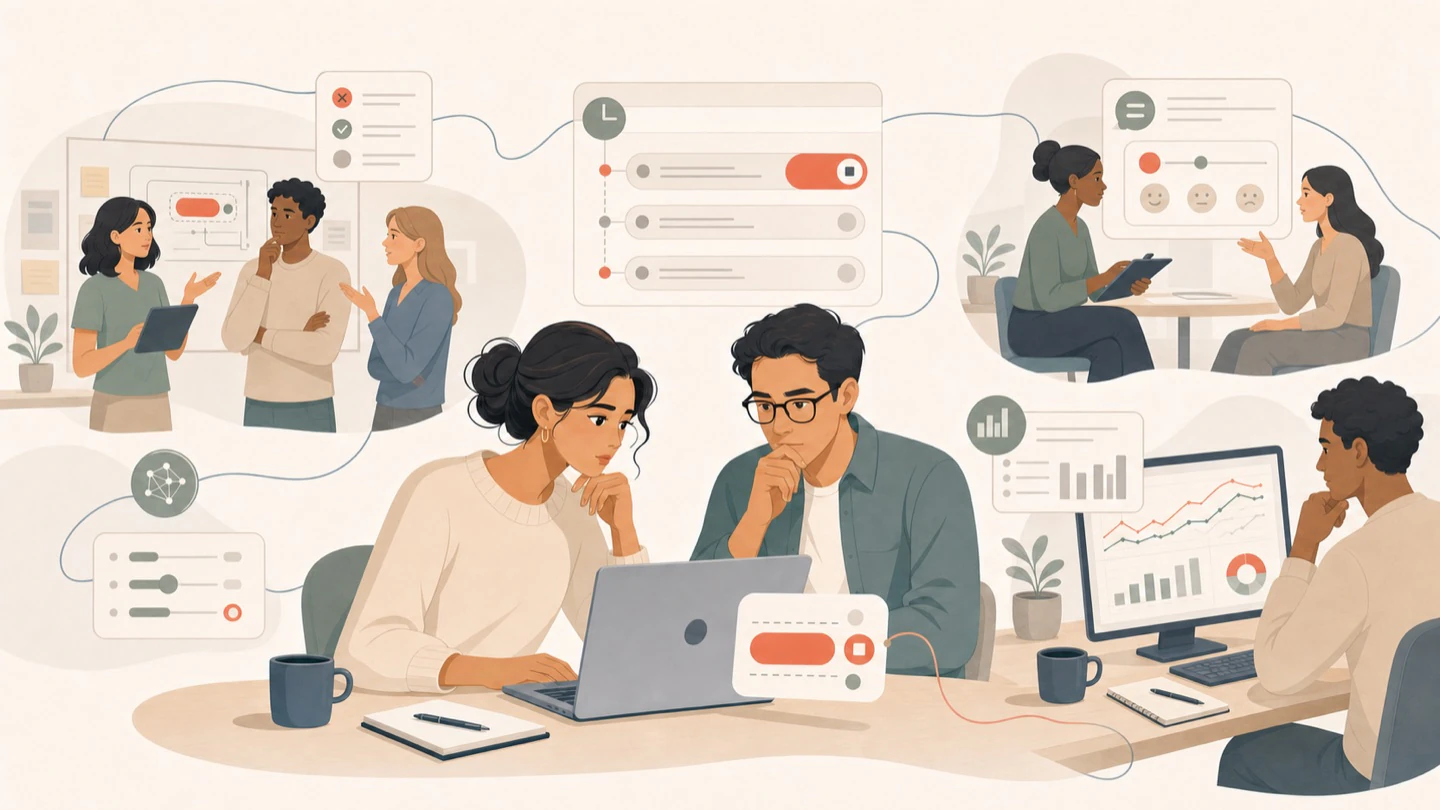
Two weeks later, new evidence complicated the story. Advanced users were repeatedly asking for unattended overnight runs. Rather than deleting the earlier lesson, Priya created a temporary Experiments / Scheduled Runs Project. It inherited safety and accessibility rules but explicitly overrode the interaction rule for a selected beta cohort. The override named an owner, rationale, start date, end date, and success and safety measures.
onemind built different packages. The research assistant received the experiment questions and participant segments. The analytics agent received the event definitions, cohort assignment, and a rule against claiming causality from small samples. Cursor and Codex received the scheduled-run architecture, stop conditions, cost limits, and tests. The Growth writing assistant received no permission to describe the experiment publicly. The support assistant received a beta explanation only for accounts in the cohort.
After four weeks, the analytics agent reported that scheduled runs were completed more often but also produced more “I forgot this was running” support messages. It proposed lowering confidence in the original lesson and expanding the experiment. Priya rejected that conclusion because the metric mixed two user segments. She corrected the analysis definition and extended the Project by two weeks. onemind preserved the rejected proposal and reason; it did not quietly rewrite the product direction.
The final decision was more nuanced than either original position. Northstar kept guided investigation as the default and added scheduled runs for experienced users with explicit cost previews, a visible activity log, and stop controls. The old lesson was superseded, not erased.
During the next two months, the team recorded one instance of avoidable work based on a rejected direction, down from three or four in a typical month. Daniel completed his first independent product task in four days because his tools could show not just the current component, but the reasoning and evidence behind it. The deeper result was not obedience. onemind helped the team remember its judgment well enough to challenge and improve it deliberately.