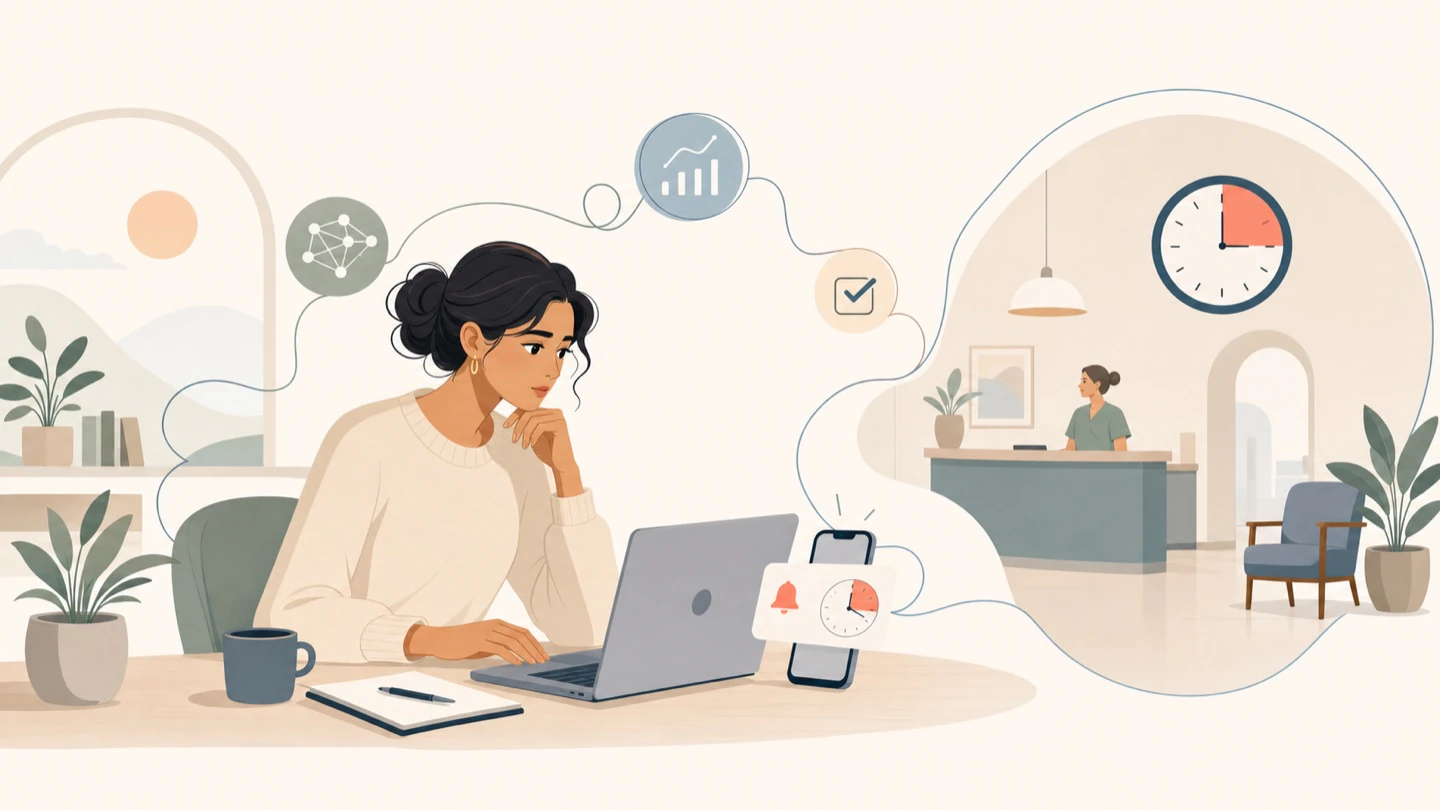
At 8:12 on a Monday morning, Maya opened her support inbox before making coffee. A clinic manager in Toronto had written that patients were receiving appointment reminders at the wrong local time after daylight-saving changes. Nothing catastrophic had happened, but the message landed badly. Six months earlier, Maya had rushed a database migration, trusted an AI-generated rollout plan, and spent most of a weekend restoring customer records. Since then, any change involving time or migrations made her cautious.
Maya was the only employee of her SaaS company. She handled product decisions in a notes app, wrote code with Cursor and Codex CLI, used ChatGPT for support drafts, and kept three enterprise customers' special contract promises in separate folders. Before onemind, every tool knew a different version of the company. Cursor knew the UI conventions because Maya had placed them in a project rule file. Codex knew the migration lesson because she often pasted it into terminal sessions. ChatGPT knew the support tone but sometimes described behavior from an old release. Maya herself was the only place where all the pieces met.
She opened onemind and selected Product / Notifications. The page showed that the Project inherited the company's privacy principles and release workflow. It also showed what was deliberately absent: customer contracts, support histories, and Growth experiments. Maya started a Codex session from that Project.
Codex did not receive the entire company Mind. onemind built a package for this task: the current notification architecture, the accepted decision about storing user time zones, the failed migration approach from six months earlier, the UI wording rule, and the tests required before notification changes could merge. The package referenced the repository at the commit Maya had checked out and identified itself as Mind version 184. Longer postmortem notes stayed available through retrieval rather than filling the initial prompt.
Maya asked Codex to investigate. It found that a fallback path converted time twice when a clinic changed its locale after creating an appointment. Codex proposed a small fix. As soon as it touched the notification scheduler, a onemind hook added four required checks to the task: daylight-saving boundaries, patient opt-out, retry behavior, and duplicate sends. Codex revised its plan before writing code.
The first test run failed. The proposed fix solved Toronto but broke clinics with appointments created before the time-zone field existed. Codex retrieved the old migration lesson and suggested a staged read path instead of rewriting every record at once. Maya could see why: the plan cited the accepted failed-approach entry and the old incident report. She approved the revised plan, but not a suggestion to make the staged pattern a company-wide rule. It was useful here, she decided, but had not yet earned that scope.
At 2:40 p.m., the tests passed. Before merge, another hook compared the reminder text with the current product wording. It caught that the new message said “your local time,” which was ambiguous for clinic staff scheduling on behalf of patients. Maya changed it to name the time zone explicitly. She merged the pull request and accepted a narrow lesson: any scheduling change must test appointments created before the current time-zone schema. onemind versioned the lesson and rebuilt only the packages that depended on notification behavior.
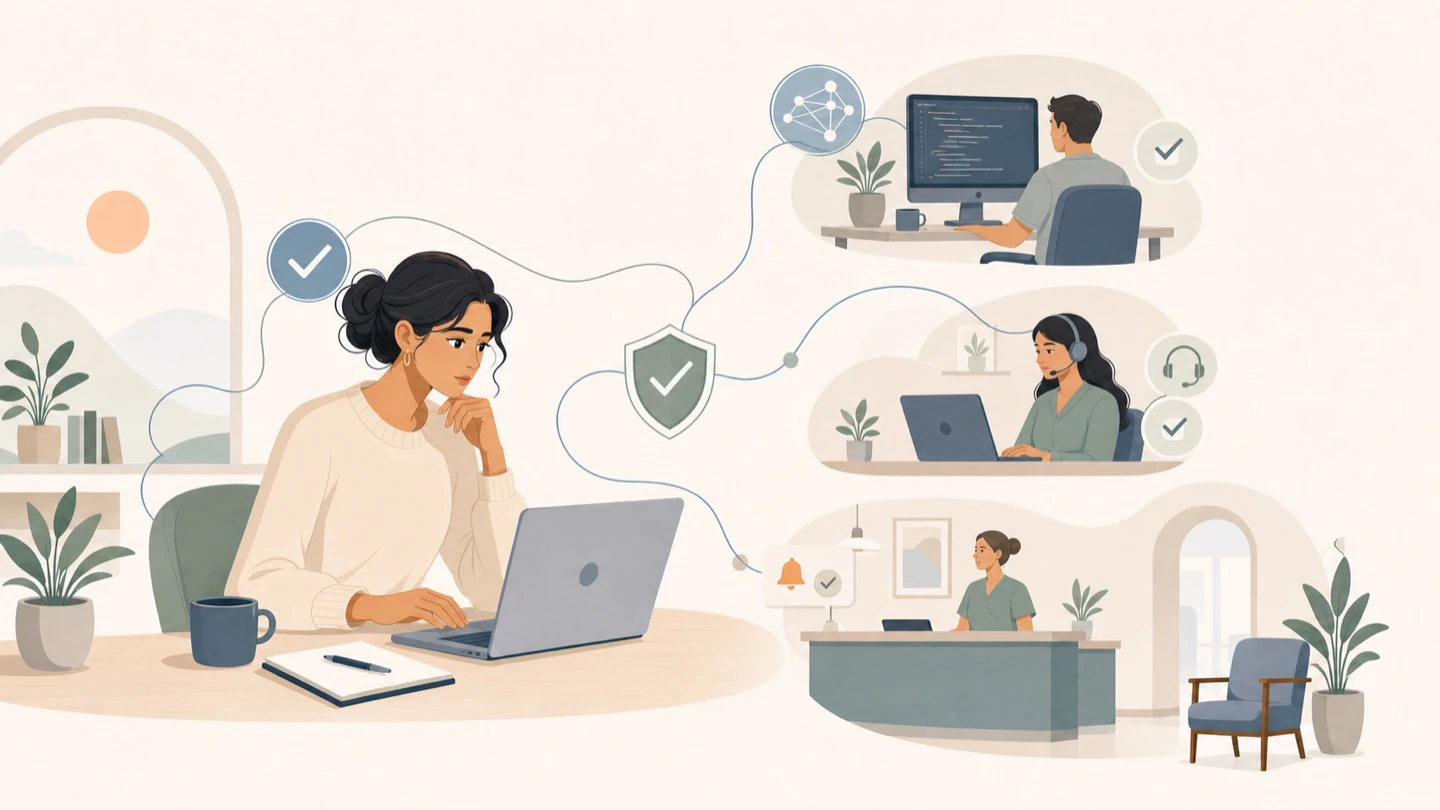
Cursor received the engineering rule the next time Maya opened the repository. ChatGPT's support workspace received the corrected product behavior and an approved explanation for clinic staff. The Growth assistant received nothing, because Maya had not approved a public claim. The Toronto customer's contract remained invisible to all three tools because no customer Project had been active.
On Tuesday, the clinic manager confirmed that the corrected reminders looked right. The support conversation produced a suggestion to improve the help-center explanation. Maya edited it, accepted it in Customer Operations, and onemind updated the support assistant. It did not change the product rule or code package.
On Friday, Maya installed a newly released coding assistant. Instead of copying several years of prompts, she connected its adapter and ran onemind's conformance preview. The preview showed that the tool could read managed instructions and retrieve references but could not enforce the pre-merge hook. onemind labeled the connection “limited,” not “current,” and told Maya exactly which protection would still depend on CI. She chose to test the tool on low-risk UI work first.
Six weeks later, Maya had not become a magically larger company. She still made every consequential decision and still spent about twenty minutes each Friday reviewing proposed lessons. What changed was the amount of her company she had to hold in working memory. Routine session setup had fallen from twenty or thirty minutes of finding and pasting context to a short check of the active Project and package diff. More importantly, the migration mistake had become an operating safeguard used by several tools instead of a bad weekend only Maya remembered.